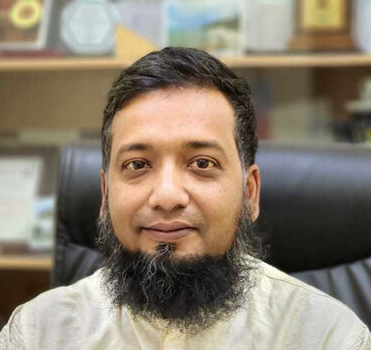
Dr. Md. Shahadat Hossain Khan is a highly distinguished academic and researcher, currently serving as a Professor and Head of the Department of Technical and Vocational Education (TVE) at the Islamic University of Technology (IUT) in Dhaka, Bangladesh. With teaching and research experience in the TVET sector dating back to 2004, he is internationally recognized for his expertise in integrating modern technologies into vocational pedagogy, curriculum development, and engineering education across both national and international contexts (particularly within OIC member states).
Educational Background & Honors Dr. Khan’s academic journey is marked by prestigious international recognitions and scholarships:
-
PhD in Education: University of Sydney, Australia. (Awarded the highly competitive Australian Leadership Award Scholarship).
-
M.Sc. in Technical Education: Islamic University of Technology (IUT), Bangladesh.
-
Additional Honors: He is also the recipient of the Graduate Research Scholarship (Brunei) and the Skill-Road Scholarship (Seoul National University, South Korea) for his outstanding academic and research expertise. He is a Fellow of the Institution of Engineers, Bangladesh (IEB).
Core Areas of TVET Expertise Dr. Khan’s research and professional advocacy bridge the gap between traditional vocational training and digital-age demands. His core specializations include:
-
Technology-Enhanced Teaching & TPACK: He is a leading regional expert on the TPACK (Technological, Pedagogical, Content, Knowledge) framework, specifically adapting it to help TVET and engineering educators effectively integrate ICT into their classrooms.
-
Advanced TVET Pedagogy: Pioneering research in student-centered teaching, flipped classroom pedagogy (especially critical during and after the COVID-19 pandemic), and Outcome-Based Education (OBE) for tertiary levels.
-
e-Teacher Professional Development (eTPD): Designing dynamic, hybrid, and electronic professional development models to continually upskill vocational instructors.
-
Generative AI & STEM in Education: Exploring how university students and educators perceive and utilize Artificial Intelligence in higher education and engineering contexts.
-
Gender & Inclusive TVET: Championing accessible education models. He has led initiatives focused on empowering women and people with disabilities through digital skills training (e.g., UI/UX design and computer graphics).
Selected Research Grants & Global Contributions Dr. Khan is a prolific researcher with over 70 publications, many in top-ranked ISI/SSCI indexed journals. He frequently secures high-level international funding to drive educational reform:
-
IDRC (Canada) Grant: Led a multi-country consortium research project investigating students’ participation and learning achievements during the pandemic, focusing on the impact of gender and inclusive pedagogical approaches.
-
Australian Government / DFAT Grants: Awarded multiple grants to establish Communities of Practice (COP) for Gender Equality, Disability, and Social Inclusion (GEDSI) and to provide direct digital skills training to marginalized groups.
-
COMCEC (Turkey) & OIC Initiatives: Served as a lead researcher investigating and developing vocational skills frameworks across the 57 member states of the Organization of Islamic Cooperation (OIC).
-
World Bank ASSET Project: Currently involved in institutional-supported and feedback-oriented advanced pedagogy contracts to modernize TVET in Bangladesh.
Educational Philosophy Dr. Khan focuses heavily on the scholarship of teaching. He believes that merely introducing technology to a classroom is insufficient; instead, educators must undergo fundamental conceptual shifts in how they view teaching and learning. Through his extensive phenomenographic research, he works to align teachers’ technological competencies with robust pedagogical strategies, ensuring that TVET graduates are equipped with the complex problem-solving skills required for the modern workforce.