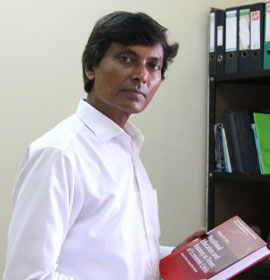
Prof. Dr. Faruque A. Haolader is a highly respected academic and foundational expert in the TVET sector with over 30 years of professional experience spanning engineering, vocational pedagogy, and institutional management. He is primarily known for his tenure as a Professor in the Department of Technical and Vocational Education (TVE) at the Islamic University of Technology (IUT) in Dhaka, Bangladesh, where he has been instrumental in shaping TVET teacher education and research. He has also taken on high-level academic administration, such as serving as Dean at Z.H. Sikder University of Science & Technology (ZUMS).
Educational Background His multidisciplinary education spans four countries, deeply informing his comparative approach to global vocational training frameworks:
-
PhD in Technical and Vocational Education: University of Stuttgart, Germany.
-
MSc in Vocational and Adult Education: (Focusing on International Development Work) Dresden, Germany.
-
MSc in Engineering (Electronics & IT): Birmingham, United Kingdom.
-
BSc in Electrical and Electronic Engineering: Dhaka, Bangladesh.
Professional Experience & Global Footprint Dr. Haolader’s career effectively bridges the gap between hands-on engineering, grassroots teacher training, and high-level policy formulation.
-
International TVET Leadership: He has served as a TVET Leadership & Management Training Expert for the International Labour Organization (ILO) and worked as a Vocational Higher Education (VHE) Expert/Team Leader in Indonesia.
-
Research & Engineering in Europe: He worked as a Research Fellow at the prestigious Fraunhofer Institute (Fh-IVI) and served as a design and development engineer in German industries, giving him firsthand experience of the German Dual VET system.
-
National Technological Contributions: Early in his career, he served as a Computer Programmer at the Planning Ministry of Bangladesh, notably installing the ministry’s first Local Area Network (LAN) in 1998.
Core Areas of TVET Expertise Informing the work of instructors, curriculum developers, and policymakers, his core specializations include:
-
Competency-Based Training & Assessment (CBT&A): Researching the systemic barriers to implementing proposed competency-based programs in TVET institutions and measuring practical student competences against industry standards.
-
Curriculum & Policy Reform: Formulating curricula reform demands in Bangladesh, analyzing the implementation of the National Technical and Vocational Qualifications Framework (NTVQF), and exploring pathways to align institutional models with real-world occupational tasks.
-
Pedagogy & Teacher Training: Developing structural models for TVET teacher education, assessing the ICT readiness of trainee teachers, and validating the integration of blended learning and educational technologies in technical disciplines.
-
Recognition of Prior Learning (RPL): Investigating the mechanisms, validation processes, and challenges of recognizing informal learning and linking those skills to formal vocational certifications.
Selected Research Themes & Contributions Dr. Haolader has authored a robust portfolio of peer-reviewed articles, book chapters, and comparative studies central to the evolution of skills development ecosystems:
-
Societal Perception of TVET: His recent qualitative research (2025) investigates the root causes behind the marginalized societal status and under-resourcing of TVET in Bangladesh, tackling entrenched issues like social stigmas, inadequate salary structures, and infrastructure deficits.
-
Green Skills & Sustainability: Analyzing the demand side of environmental sustainability through skills recognition and the integration of green competencies into formal vocational training.
-
Systemic Transition Pathways: Exploring how VET systems have expanded in lower-middle-income countries (LMICs) and analyzing national policy documents to ensure technical education remains accessible and effective for all demographics